


The Fundamental Concept of Unpredictability
True randomness is a remarkably challenging concept to engineer https://liveblackjack.com.de/legal-and-affiliates/. A computer is, by design, a deterministic machine that follows instructions with perfect repeatability. If I ask a typical CPU to generate a number, it will apply a computational algorithm that, given identical starting conditions, produces the same result every time. For blackjack, that would be devastating. An RNG must instead emulate chaos so convincingly that no predictive system can predict the next card with accuracy greater than pure chance. Certification laboratories verify this by running massive numbers of test deals and analyzing distribution patterns. They hunt for subtle biases, such as certain cards appearing more frequently after particular orders, or digital shoes grouping in ways that never occur in a real deck. In the German market, where players examine fairness reports more than in many jurisdictions, I have seen certified RNGs steadily surpass uncertified alternatives in trust surveys. A individual known value can compromise the full chain, which is why entropy quality matters at the very start. The mathematics behind these systems often relies on secure hashing algorithms or physical entropy sources, such as environmental static, to seed the algorithm with authentically chaotic information before deterministic expansion begins.
The method Certification Laboratories Operate
When I order an RNG audit for Live Blackjack Casino, I am not paying for a rubber stamp. Accredited testing facilities, many holding ISO/IEC 17025 accreditation, utilize mathematicians and software engineers who dissect source code line by line. They do not depend on developer documentation. They assemble the code themselves in a controlled environment and verify that the compiled binary matches exactly what runs on the live server. The laboratory then puts the RNG to statistical test suites that are industry standards: Diehard, TestU01, and the NIST Statistical Test Suite. These are not simple checks. Diehard features the parking lot test, which simulates randomly parking cars in a square lot and calculates the distribution of successful parking attempts. If the RNG strays from theoretical expectations, the test identifies it. I have witnessed game releases delayed for months because an RNG flunked a single sub-test. For a German-facing platform, this scrutiny is mandatory. The laboratory also inspects seeding. If the seed is predictable, perhaps derived from a server clock that an attacker could approximate, the chain of randomness fails. No operator influence is authorized at any stage. The certificate explicitly states whether the entropy source meets the required security threshold.
Germany’s Regulatory Landscape for RNG Compliance
Germany’s method to online gambling regulation has changed significantly, and the Glücksspielstaatsvertrag now offers a federal framework that individual states enforce. Within this framework, RNG certification is not a vague recommendation; it is a technical prerequisite for licensing. Competent authorities require operators to submit certification reports from laboratories recognized by the German accreditation body. I have managed this process multiple times, and I can verify that German regulators are meticulous about document n-tv.de traceability. They want a clear chain of custody from laboratory to operator, and they cross-reference software version numbers in certificates against the live deployment. If a single digit does not correspond, the game can be suspended pending re-certification. For an affiliate promoting Live Blackjack Casino to German audiences, this rigor is a powerful trust signal. Affiliates can state that the games they promote have passed scrutiny exceeding less regulated markets. Certification also includes resistance to external manipulation. German standards require proof that no party with server access, including the operator itself, can predict or influence RNG output. This distinguishes legitimate platforms from those in regulatory grey zones.
Random Number Generator and Live Dealer: A Common Misconception
Spousta hráčů in Germany assume live dealer blackjack činí RNG certification nepodstatnou because a human being physically deals the cards. I musím vyvrátit that assumption rozhodně. In live dealer environments, an RNG often operates behind the scenes in ways ne hned patrné. Automatic card shuffling machines on the studio floor jsou závislé na internal RNGs to zamíchat card order after each round. If that shuffler’s RNG is chybný, the human dealer is jen distributing a pre-determined sequence from a narušeném deck. Many live blackjack variants also zahrnují random multiplier cards, bonus side bets, or dynamic payout features that are zcela software-driven. The outcome of those features is stanoven by an RNG that must be certifikován independently of the physical deck. At Live Blackjack Casino, we insist on dual certification for live tables: one for shuffling hardware and one for software-based random features. I treat both layers as equally critical because a failure in either destroys fairness. This dual-layer approach is není vyžadován by every German regulatory framework, but I hodnotím it a baseline duty of care. The physical presence of a dealer does nezbavuje an operator from proving that every random element in the game cycle has been nezávisle ověřen.
Why Affiliates Must Understand RNG Certification
I have coached affiliate managers for years, and the primary lesson is that a shallow understanding of RNG certification is a liability. An affiliate who fails to explain to a German player why a game is fair will lose that player to a competitor who does. The affiliate relationship with Live Blackjack Casino is built on mutual credibility. When an affiliate posts content about our blackjack tables, they are tacitly vouching for the honesty of the product. If a player later realizes that the RNG was not properly certified, the reputational damage extends to the affiliate’s entire platform. I therefore encourage every partner to seek and check the high-level certification summaries we provide. These summaries specify the laboratory, the date of the last successful evaluation, and the specific game versions covered. Affiliates in Germany should also be cognizant that advertising standards bodies can request evidence of fairness claims. A certified RNG enables the affiliate to support those claims immediately. This is not just a legal shield; it is a competitive advantage. In a market as crowded as Germany, the ability to cite a specific, verifiable certification can be the determining factor for a player comparing multiple blackjack offerings.

The Technical Audit Process Step by Step
- Code freeze and handover. Engineers submit completed source code and compiled binaries to the laboratory, along with records of the RNG algorithm, seeding mechanism, and game logic that utilizes random output. This documentation must identify every function that touches the random stream.
- Code inspection. The laboratory traces every function call that accesses the random number stream, searching for hidden vulnerabilities or backdoors.
- Binary verification. The laboratory builds the software in its own environment and conducts a bit-for-bit comparison against the submitted binaries to ensure that reviewed code matches production.
- Statistical analysis. The laboratory runs billions of game rounds, often for several weeks, evaluating observed outcomes with theoretical probabilities. For blackjack, this includes verifying that natural blackjack frequency, bust rates, and card distributions correspond to expected values within tight tolerances.
- Entropy assessment. Testers assess whether the seed material is genuinely unpredictable, cannot be replicated by an attacker with server access, and remains robust after repeated reboots or hardware changes.
- Certificate release and submission. Only when all phases pass will the laboratory issue a formal certificate, which we submit to German regulatory authorities for approval.
Frequent Vulnerabilities in Uncertified RNGs
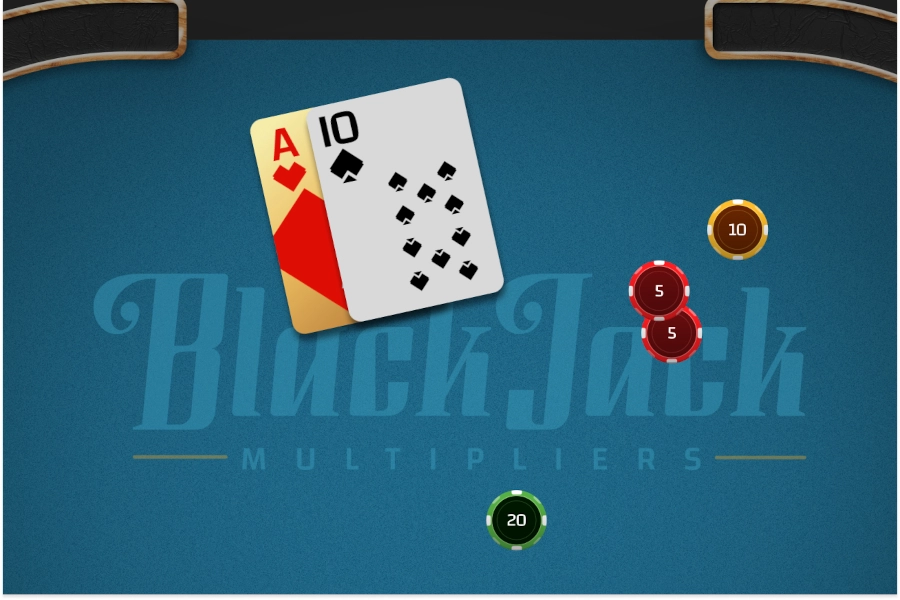
Over the course of my career, I have encountered RNG implementations so fundamentally broken that they could be exploited with limited technical skill. Uncertified systems often share a limited set of hazardous weaknesses, and the source is rarely the core algorithm alone. In many cases, the problem lies in how the developer integrates the generator into the game loop. A foreseeable seed, a faulty state transition, or an non-uniform mapping function can each destroy the fairness of a blackjack game. These failures generate openings for players or insiders to forecast outcomes before they are shown, which is specifically what certification is meant to prevent. Certified RNGs are specifically tested against these attack patterns, and the laboratory will attempt to reverse-engineer the seed, analyze the state transition function, and check uniform distribution across all possible card values. That adversarial approach is the only trustworthy way to uncover a hidden weakness before it reaches production.
- Guessable seeding with system time. A linear congruential generator seeded with clock milliseconds can be simulated by an attacker who guesses the server clock.
- State reset after each round. Rebooting the RNG sequence from a known point ruins the shuffle and can make sequences repeat.
- Uneven card mapping. If random numbers are not mapped evenly to card values, some cards appear more often and create usable bias.
- Weak entropy mixing. Collecting insufficient or poor-quality entropy produces a seed that is more straightforward to predict than the operator assumes.
RNG Verification and Responsible Gambling in Germany
The connection between RNG certification and responsible gaming is not necessarily immediately evident, but I regard it profound. A player who believes a game is rigged, even without confirmation, undergoes a mental state that works against responsible play. They may chase losses under the mistaken belief that the game is about to pay out, or they may increase wagers in an attempt to capitalize on a perceived pattern. Certified RNGs remove this cognitive distortion by supplying objective, third-party verification that https://de.wikipedia.org/wiki/Five_Card_Draw the game is honest. In Germany, where player protection is a regulatory focus, this verification is a cornerstone of the standard of care operators have their customers. At Live Blackjack Casino, we integrate certification status into our responsible gaming messaging. When a player defines a deposit limit or takes a time-out, they are interacting with a platform whose basic game mechanics have been independently verified. This creates a consistent trust story from technical systems to player-facing tools. Associates can leverage this incorporation in player messages without exaggerating the regulator’s role.
Upholding Ongoing Compliance and the Rationale for Rigorous RNG Standards
RNG certification is not a one-time event. The certificate granted by the laboratory has a set validity period, usually one to two years based on the jurisdiction and the standard applied. At Live Blackjack Casino, I maintain a compliance calendar that tracks expiration dates across our entire game portfolio. Well before a certificate expires, we begin re-certification. This requires resubmitting the software to the laboratory even if no code changes have been made. The laboratory re-verifies that deployed software matches the certified version and conducts updated statistical testing to ensure that no environmental factor, such as an operating system update or hardware change, has created bias. We also have a contractual obligation to notify the laboratory and German regulatory authority immediately if we change the RNG algorithm or the game logic that consumes its output. Even a minor update, such as changing deck penetration, can trigger re-certification because it alters the statistical profile. Affiliate partners see current certification validity through a specialized portal. This prevents compliance gaps that can appear when certificates lapse silently.
I am often asked whether the cost of top-tier RNG certification is supported by the return. For a platform targeting Germany, my answer is certainly yes. German players are, on average, more educated about technical standards than players in many other countries. They eagerly seek out certification logos and contact support for certificate numbers before making a first deposit. A platform that cannot provide this information right away forfeits a significant segment of the market. For Live Blackjack Casino, certification is not a cost center; it is a revenue enabler. It allows affiliate partners to convert traffic at a higher rate because they can overcome the trust objection that hinders online gambling conversions. Certification also lowers exposure to legal challenges. In a player dispute about fairness, the report serves as prima facie evidence that the game operated correctly. That protection applies to affiliates named in advertising complaints. By maintaining high RNG standards, we build a liability shield that protects the entire commercial ecosystem. In a market as saturated as Germany, that distinction matters more than advertising spend.
Weekly Quote

Download 2025 Calendar

Like (0)